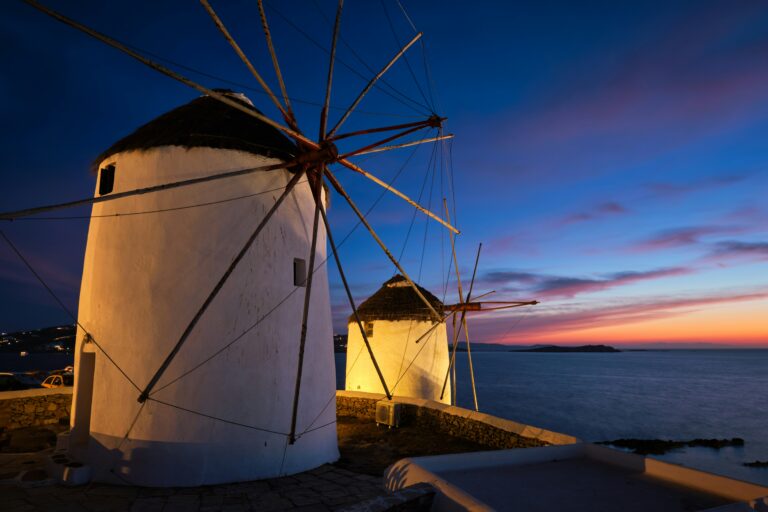

Hospitality and tourism form the backbone of the Mykonos economy. As one of the most recognizable destinations in the Mediterranean, the island attracts millions of visitors each year, creating significant opportunities for hotels, villas, restaurants, tourism services and related businesses. At the same time, this success brings increased competition, operational complexity and growing pressure on infrastructure, resources and profitability.
In this evolving environment, sustainable success in hospitality requires more than strong demand. It requires strategic planning, financial discipline, market awareness and long-term vision. Businesses that rely solely on seasonal performance or short-term growth often struggle to maintain stability, efficiency and profitability over time.
At FLOIOS, we support hospitality and tourism enterprises by providing structured consulting services that help transform opportunity into sustainable performance.
The Changing Landscape of Hospitality in Mykonos
Tourism in Mykonos has evolved significantly over the past decade. What was once a seasonal destination has become an international brand operating almost year-round, attracting diverse visitor profiles with different expectations, spending patterns and service standards.
Today’s hospitality businesses face key challenges such as:
Increasing operational and labor costs
Strong competition and market saturation
High guest expectations and service differentiation
Seasonal cash-flow fluctuations
Regulatory and environmental pressures
Rising investment and maintenance requirements
At the same time, opportunities continue to grow for businesses that can adapt, innovate and plan strategically.
Simultaneously, marketing costs have experienced an upward trajectory. According to the insights gathered from our December survey of Chief Marketing Officers (CMOs), the average cost per click witnessed a substantial increase of 20 percentage points in 2022 compared to the previous year.

The Importance of Strategic Planning in Hospitality
Strategic planning is no longer optional in the hospitality sector. It is essential for:
Aligning operations with market demand
Controlling costs and improving profitability
Managing seasonality and cash flow
Supporting investment and expansion decisions
Ensuring long-term business sustainability
At FLOIOS, we work closely with hospitality operators to develop structured strategies that take into account market trends, financial performance and operational realities. Our goal is to help businesses move from reactive decision-making to proactive, data-driven planning.
However, there is a viable path forward. Instead of solely focusing on substantial and indiscriminate budget cuts, companies can adopt an investor mindset and take a more nuanced approach to their marketing investments. This approach involves identifying areas of overspending and reducing expenses where necessary, while simultaneously allocating additional resources to initiatives that offer greater potential for long-term return on investment (ROI). By eliminating inefficient spending, successful companies can potentially achieve savings ranging from 10 to 20 percent. These savings can then be reinvested in more efficient efforts and targeted campaigns, aiming to drive growth in the range of 5 to 10 percent.
This strategic reallocation of resources can help companies create a significant competitive advantage.
“Building sustainable hospitality through strategy, insight and long-term vision.”
Financial Planning and Performance Management
Despite the ongoing economic volatility, the current year presents a pivotal opportunity for marketers to unlock substantial value for their companies, leveraging efficiency gains to drive growth and
Strong financial management is the foundation of every successful hospitality operation. High revenue does not always translate into profitability, particularly in destinations with intense seasonality and high operating costs.
Our financial planning services focus on:
Budgeting and cost control
Revenue forecasting and cash-flow planning
Profitability analysis by service or unit
Scenario planning for seasonal variation
Financial performance monitoring
By implementing structured budgeting and forecasting models, hospitality businesses gain better control over their finances and the ability to make informed operational and investment decisions.
a clear agenda for the future.
In times of uncertainty, it may be tempting for companies to retract and adopt a conservative approach. However, we firmly believe that organizations that choose to double down on growth initiatives will not only recover more swiftly but also emerge from these challenges in a position of strength. These turbulent times serve as a defining moment for Chief Marketing Officers (CMOs) and marketing leaders to direct their focus intensely.
Investment Planning and Feasibility Analysis
The hospitality sector in Mykonos continues to attract investment interest, from renovations and expansions to new developments. However, not every investment guarantees success.
At FLOIOS, we provide feasibility studies and investment analysis that help investors and business owners evaluate:
Market demand and competitive positioning
Expected return on investment
Capital requirements and funding options
Operational sustainability
Risk exposure and mitigation strategies
Our feasibility analyses are based on real market data, financial modeling and sector expertise, ensuring that investment decisions are grounded in realistic expectations rather than assumptions.
Market Research and Positioning
Understanding the market is critical in a destination as competitive as Mykonos. Hospitality businesses must clearly define their positioning, target audience and value proposition.
Our market research services focus on:
Demand trends and visitor profiles
Competitive benchmarking
Pricing strategies and market segmentation
Consumer behavior and expectations
Emerging tourism trends and opportunities
This insight enables businesses to refine their offerings, strengthen their brand positioning and adapt to changing market conditions.
Sustainability and Long-Term Resilience
Sustainable tourism is no longer a trend — it is a necessity. Environmental impact, resource management and community integration are becoming central factors in business success and regulatory compliance.
FLOIOS supports hospitality businesses in developing strategies that balance growth with sustainability, including:
Resource efficiency and cost optimization
Environmental impact awareness
Long-term operational planning
Alignment with regional development objectives
By integrating sustainability into strategic planning, hospitality businesses can enhance their reputation, reduce risk and secure long-term viability.
How FLOIOS Supports Hospitality & Tourism Businesses
Our consulting approach is built around clarity, structure and measurable results. We work with:
Hotels and resorts
Boutique accommodations and villas
Tourism and leisure operators
Hospitality investors and developers
Mixed-use and destination projects
We provide end-to-end support, from initial assessment and planning to financial analysis, funding preparation and strategic execution.
Conclusion
Hospitality and tourism in Mykonos offer significant opportunities, but long-term success requires more than strong demand. Strategic planning, financial discipline, market insight and sustainability are essential for building resilient and profitable businesses.
At FLOIOS, we help hospitality professionals navigate complexity, make informed decisions and create value that lasts beyond the season. Through structured consulting and deep local knowledge, we support businesses in shaping a sustainable and competitive future in one of the world’s most dynamic tourism destinations.